Cartoon Bee Flying ITH Keyfob Design
When I first opened the Cartoon Bee Flying ITH Keyfob Design, I was expecting a simple novelty stitch-out. What I found instead was a surprisingly versatile machine embroidery design that could work in more places than just a keychain. After testing it across several projects, I want to share what this design actually delivers, where it performs best, and where you might want to think twice before pressing start.
First Look: A Bee with Real Personality
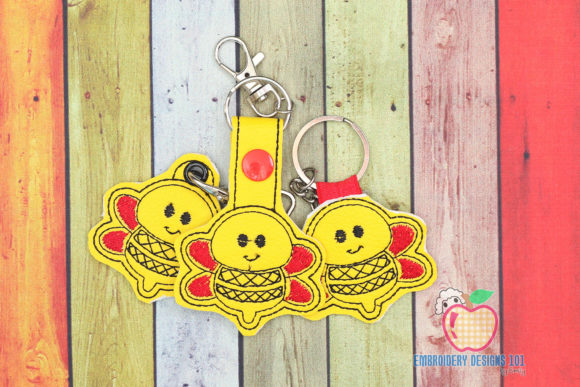
The design reads as a friendly, slightly whimsical bee in mid-flight. The wings are open, the body is angled as if it is actually buzzing somewhere, and the overall silhouette stays clean and readable even at smaller sizes. It does not try to cram in too many tiny details. That restraint is exactly what makes this machine embroidery design feel polished rather than fussy. It belongs to the Bugs category, but it avoids the creepy-crawly vibe entirely. This bee is cute, approachable, and neutral enough to appeal to children and adults alike.
From a designer's perspective, the mood lands somewhere between playful and sweet, with just enough movement to keep it from looking static. It would feel at home on a child's backpack, a handmade gift for a nature-loving friend, or even a boutique product for a small shop that leans into garden or bee themes. The design does not rely on trendy styling, so it should age well in your digital embroidery file collection.
Real-Use Scenario: Testing on a Custom Tote Bag
I wanted to see how this design would hold up in a project that could actually be sold, so I stitched it onto a cotton canvas tote bag destined for a craft fair. I used a medium-weight cutaway stabilizer and hooped firmly. The bee stitched out cleanly, with the satin stitch sections holding a crisp edge and the fill stitch areas covering evenly without gaps. The thread colors I chose were a warm yellow, deep black, and soft white, and the contrast popped beautifully against the natural canvas background.
After the first stitch-out, I made a second version on a light blue denim tote. The bee looked even better there. The yellow really sang against the cool blue. I could see this design being a strong candidate for any tote bag design where you want something cheerful but not childish. If you are an Etsy seller or a small shop product creator, this is the kind of design that photographs well in listings and holds up to repeated use. I would not hesitate to put it on a sweatshirt embroidery project either, especially for spring or summer inventory.
Where This Design Shines in Production
In my experience, the Cartoon Bee Flying ITH Keyfob Design works best on stable, medium-weight fabrics. Cotton, linen, denim, canvas, and quilted cotton all handle the stitch density well. It is also a natural fit for baby embroidery projects, such as a onesie or a small blanket, provided you use a soft stabilizer and test the fabric first. The design is friendly enough for holiday embroidery gifts, especially for spring, Easter, or a summer birthday.
I also tested it as an embroidered patch on twill fabric. The patch stitched out cleanly, and the bee shape trimmed easily with a hot knife. If you sell patches at markets or through your online shop, this design could become a quick turnover item. It also works well as a decorative accent on aprons, kitchen towels, and pillow covers. For custom apparel like a cap or a hat, I would recommend testing it on a curved surface first, because the wings have some open areas that could shift if the fabric is not hooped firmly.
Stitching Reality: Thread Changes, Density, and Stabilizer
Let me be direct about the stitching experience. The design uses a moderate number of thread colors, and the color changes are logically ordered. You will not find yourself constantly trimming jump stitches or rethreading for tiny sections. The stitch density feels balanced. The fill stitch areas are dense enough to cover the fabric well, but not so thick that they cause puckering on lightweight materials. I would still recommend using a tear-away or cutaway stabilizer depending on your fabric. For stretchy knits, a cutaway is non-negotiable.
I did notice that the satin stitch sections around the bee's body and wings require good tension. If your machine is even slightly off, you might see uneven edges. Run a test stitch-out on scrap fabric before you commit to a final product. This is a standard practice for any digital embroidery file, and this design rewards that care. The running stitch details are minimal but well placed, adding a bit of texture without overwhelming the overall look.
Check your hoop size before you start. The design fits comfortably in a mid-size hoop, but you should confirm the exact dimensions in your embroidery file before hooping. If you are working with a smaller hoop, you may need to adjust your layout or choose a different design. The file format options are listed in the product description, so make sure you download the correct version for your machine.
Where to Be Careful with This Design
No design is perfect for every situation, and this one has a few limitations worth noting. I would avoid using it on very thin or delicate fabrics like silk or lightweight polyester, because the stitch density could cause the fabric to pull or distort. The same caution applies to highly stretchy materials like jersey knit or ribbed fabric. If you must use it on a stretchy base, pair it with a strong cutaway stabilizer and consider a lightweight fusible interfacing behind the embroidery area.
On dark fabrics, the yellow and white thread colors will show beautifully, but the black outlines may blend in if the fabric is very dark. Test the contrast on a sample before stitching a final product. If you are stitching onto a layered garment like a hoodie with a front pocket, make sure the design area lies flat and does not sit over a seam or a thick hem. The bee shape is compact enough to work on most chest or back placements, but I would not recommend it for tiny areas like cuffs or collars.
If you plan to sell finished products using this design, check the commercial embroidery licensing terms that come with your download. The product description mentions multiple file formats, but it does not explicitly state the license scope. Before you list anything on Etsy or at a craft fair, confirm whether the license allows you to sell physical items. When in doubt, contact the designer directly. This is a step every craft business owner should take before investing time in production.
What This Design Means for Your Brand and Customer Trust
When you stitch a design like this onto a handmade product, you are making a statement about your brand. A clean, well-stitched bee tells your customer that you care about quality. The visual appeal is immediate: the bee is recognizable, cheerful, and easy to love. That kind of giftability matters, especially if you sell through printable mockup listings or at in-person markets. Customers who see a polished bee on a tote bag or a sweatshirt are more likely to trust your work and come back for more.
The design also works well for personalized gifts. I can imagine adding a monogram or a small name below the bee for a custom baby gift or a teacher appreciation present. That extra touch raises the product value and makes the item feel one-of-a-kind. If you are a creative entrepreneur building a consistent brand, this design fits into a nature, garden, or spring theme without feeling forced. It is specific enough to be memorable, but broad enough to pair with other designs in a cohesive collection.
Designer Notes: Before You Stitch or Sell
- Test on scrap fabric first. This is the single most important step. Every machine handles thread colors and density differently. Run a test stitch-out on a fabric similar to your final project.
- Check thread color contrast. The yellow and black combination is classic, but test it against your specific fabric. A white or light background will make the bee pop. On dark fabric, consider whether the black outline needs to be switched to a lighter color.
- Review stitch density. If the design feels too dense for your fabric, you can reduce the density slightly in your software, but be careful not to compromise the coverage. Always test the adjusted version.
- Confirm hoop size. The design requires a specific hoop size for optimal stitching. Measure your hoop and compare it to the design dimensions before you begin.
- Test in black and white mockups. If you sell digital products or use design assets for mockups, check how the bee reads in grayscale. A design that relies heavily on color contrast may lose definition in black and white.
- Compare light and dark fabric backgrounds. Stitch one version on white and one on black. See which one looks better for your intended product line. You may decide to offer both options to your customers.
- Use proper stabilizer. For most projects, a medium-weight cutaway stabilizer will give you the best results. For tote bag design or sweatshirt embroidery, do not skip the stabilizer. It keeps the stitches crisp and the fabric flat.
- Check licensing before selling. The product description does not specify the license terms. If you plan to sell finished products or use the design for commercial embroidery, verify the license first. This protects both you and the designer.
Final Thoughts on the Cartoon Bee Flying ITH Keyfob Design
After spending time with this machine embroidery design, I can say it is a solid addition to any embroidery project collection. It is not overly complex, but it has enough personality to stand out on a finished product. The bee shape works well on a range of items, from keyfob projects to tote bags, patches, and apparel. It is a design that rewards careful setup and good stabilizer choices, and it delivers a professional look that customers respond to.
If you are a hobbyist looking for a quick gift idea, or a small business owner building a spring product line, this design is worth the download. Just take the time to test it, review the license, and match it to the right fabric. Done right, this little bee will earn its place in your rotation.